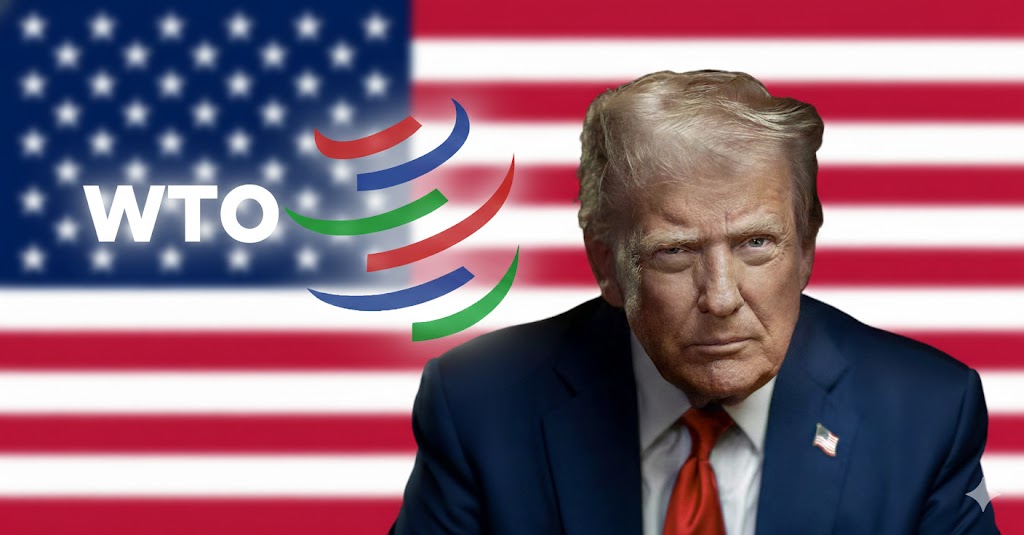
On December 15, 2025, the United States released a statement on reforming the WTO (World Trade Organization), expressing serious concern about the current multilateral trading system. The statement focuses on (1) decision-making and institutional design, (2) security and sovereignty, and (3) structural problems such as overcapacity and non-market practices. While emphasizing the limits of the WTO, the United States clearly signaled a turn toward plurilateral agreements among like-minded countries.
Key Points of the Statement: Limits of Multilateral Negotiations and Demands for Institutional Reform
At the core of the U.S. argument lies the view that “reaching consensus among 166 members is not realistic, and multilateral negotiations have reached their limits.” Accordingly, rather than relying on frameworks that assume unanimous agreement by all members, the United States argues it is preferable to prioritize plurilateral agreements that build results among countries that share objectives.
The statement also suggests that the most-favored-nation (MFN) principle is increasingly outdated in an era where some members do not pursue market-based policies, implying that the premise of treating all members equally no longer matches reality. To address unfair practices, it argues for reforms that enable more flexible, targeted responses.
Regarding special and differential treatment (SDT) for developing countries, the United States argues that allowing major economies to continue claiming “developing country” status and receiving benefits undermines the system’s credibility, insisting SDT should be a temporary tool to support compliance with rules, not a permanent entitlement. The statement further criticizes the WTO Secretariat for allegedly going beyond neutral administration—through policy advocacy, independent investigations, and pressure on members—thereby encroaching on members’ authority.
Security and Sovereignty: Emphasizing Areas Dispute Settlement Should Not Enter
On security exceptions, the United States asserts that it is a sovereign right for each country to take measures to protect its essential security interests, and that WTO panels do not have the authority to judge the legitimacy of such measures. In other words, it seeks an institutional design that prioritizes national discretion over constraints imposed by trade rules.
On economic security, the statement argues that discussions require confidentiality and shared values, and that it is inappropriate for all 166 members—given their differing backgrounds—to handle such matters in the same forum. This reflects an intention to expand policy room under the banner of security.
Structural Problems the WTO Cannot Address: Supply Chains, Overcapacity, and Non-Market Practices
The United States views supply-chain resilience as an area where the WTO is biased toward liberalization, potentially conflicting with policies such as domestic production of critical goods and trade barriers against specific countries. From this perspective, liberalization disciplines can exacerbate vulnerabilities rather than reduce them.
The statement also expresses frustration that the WTO’s monitoring and dispute settlement functions have not adequately addressed overcapacity and excessive concentration of production driven by massive subsidies and non-market policies in certain countries. The repeated reference to “non-market practices” is readily understood as pointing to China. The United States appears increasingly inclined to tackle these issues through direct negotiation rather than relying on WTO adjudication.
Implications: How Skepticism Toward Multilateral Order Creates Challenges for Allies
The statement makes U.S. skepticism toward multilateral frameworks and free trade unmistakable, and it highlights divergences from other Western advanced economies. For Japan in particular, which treats international cooperation and the maintenance of free trade as foundational, trade negotiations may become more complex as the United States emphasizes the WTO’s limits while prioritizing bilateral and plurilateral approaches.
Domestically, the posture may also function as a signal to constituencies skeptical of free trade and globalization by demonstrating a “tough” stance. The reform argument is not merely a statement of principles; it is a policy message that simultaneously encompasses China policy, domestic politics, and alliance coordination—an aspect that warrants careful attention.
References
https://www.jetro.go.jp/biznews/2025/12/8a842e998a6078b5.html
https://docs.wto.org/dol2fe/Pages/SS/directdoc.aspx?filename=Q:/WT/GC/W984.pdf&Open=True