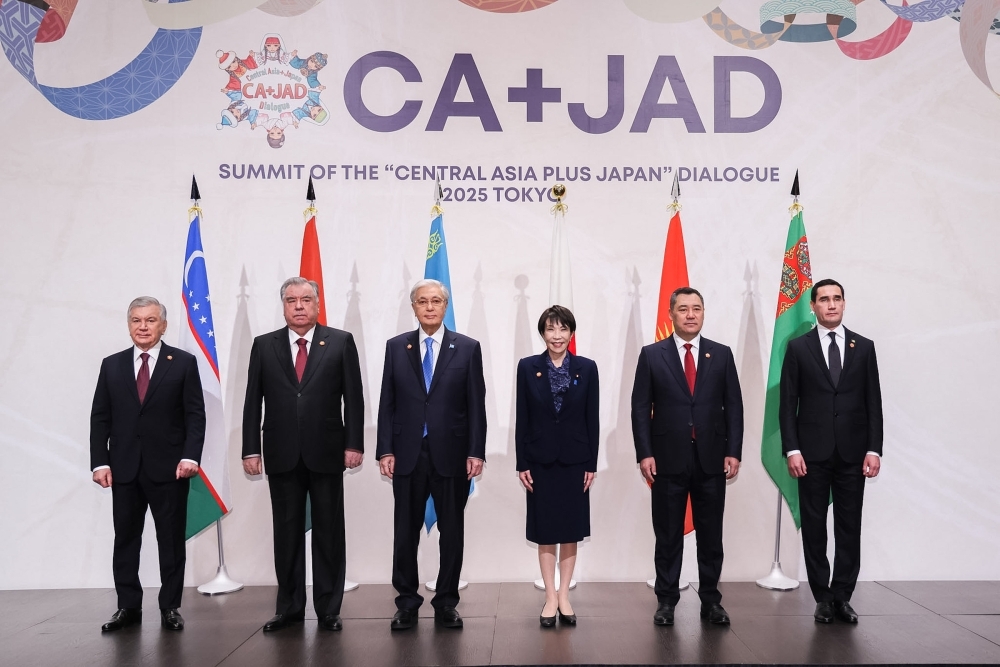
On the morning of December 20, the first-ever "Central Asia plus Japan" Dialogue (CA+JAD) Summit was held at a hotel in Tokyo. Chaired by Prime Minister Sanae Takaichi, the summit brought together the presidents of the five Central Asian countries: Kazakhstan, Kyrgyzstan, Tajikistan, Turkmenistan, and Uzbekistan.
21 Years of Progress and Rising Importance
In her opening remarks, Prime Minister Takaichi welcomed the 21st anniversary of the dialogue framework, which Japan launched in 2004 ahead of other nations. She emphasized that, in light of recent shifts in the international situation, the importance of Central Asia—a geopolitical nexus rich in resources—is growing significantly within the international community. In response, the Central Asian leaders expressed their gratitude for Japan's efforts in hosting this inaugural summit and highly praised Japan's long-standing role in promoting regional integration and cooperation.
New Initiative and Strategic Intent
During the main session, Prime Minister Takaichi announced the launch of the "CA+JAD Tokyo Initiative" to strengthen mutually beneficial relations and support industrial sophistication in the region. The initiative identifies three priority areas for cooperation: "Green & Resilience," "Connectivity," and "Human Resource Development." Specifically, it includes measures to strengthen critical mineral supply chains, combat climate change, facilitate logistics along the Caspian Sea route, establish a "Japan-Central Asia AI Cooperation Partnership," and hold meetings of Justice Ministers. Furthermore, an ambitious goal was set to generate business projects totaling 3 trillion yen over the next five years.
Central Asian countries face the challenge of economic structures heavily dependent on resource extraction and primary industries such as mining, agriculture, and livestock farming. Having been forced into unstable economic management by fluctuating global resource prices, these nations are likely to welcome Japan's cooperation—aimed at industrial diversification—as highly meaningful. Additionally, the inclusion of numerous references to human resource development and connectivity (broadly, infrastructure development) suggests an intention to check China's Belt and Road Initiative. Since external support is essential for infrastructure development in their vast territories, Central Asian nations share a mutual interest with Japan. For Japan, accelerating economic investment helps remove barriers to activity and mitigates China's influence; thus, these areas have been prominently featured in the agreement.
Shifting Diplomatic Stance in the "Tokyo Declaration"
The Central Asian leaders welcomed the new initiative and expressed strong enthusiasm for strengthening cooperation with Japan in fields such as resource and energy development, disaster prevention, logistics connectivity, and human resource development. The summit concluded with the adoption of the "Tokyo Declaration," a joint leaders' statement. Additionally, over 150 documents were signed or announced by the public and private sectors combined, marking a historic turning point symbolizing a new cooperative relationship between Japan and Central Asia.
While cooperation between Japan and Central Asia is expected to strengthen, it is notable that the declaration is restrained regarding political language, particularly concerning democracy and freedom—values Japan typically prioritizes—with the core focus shifting to economic cooperation. This reflects a consideration for the authoritarian regimes present in the region. It is necessary to note that this represents a partial retreat from the values-oriented diplomacy, centered on democracy and liberalism, that Japan has previously championed.
References and Credits
Photos and information in this article are cited and referenced from the following source:
"Holding of the 'Central Asia plus Japan' Dialogue Summit Meeting (Results)" | Ministry of Foreign Affairs of Japan